Call for Papers: Algorithmic Parenting: The Rise of Data-Driven Child-Rearing
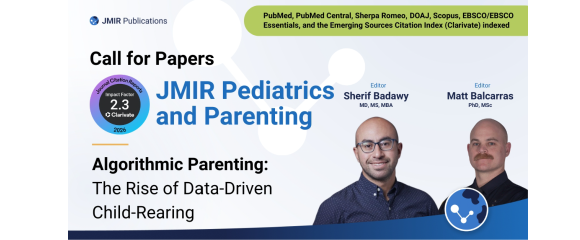
This section explores the modern shift from traditional, intuitive child-rearing to a data-driven model where digital technology guides parental planning and decisions. Today, parents are using artificial intelligence (AI), biometric sensors, smart nursery devices, and mobile tracking apps to monitor their child’s health, sleep, behavior, and developmental milestones in real time. While these technology-enabled sources aim to optimize childhood development and reduce the cognitive and mental load of parenting, they also introduce complex questions regarding data privacy, parental anxiety, algorithmic bias, and the long-term impact on child psychology and the parent-child bond.
We invite researchers, clinicians, and digital health innovators to submit original research, viewpoints, and rigorous literature reviews to address this technological paradigm shift in contemporary parenting.
Topics of Interest
We welcome submissions exploring a wide range of digital approaches, strategies, and impacts related to algorithmic parenting, including but not limited to the following topics:
- Smart monitoring and biometrics, including the efficacy and clinical utility of wearable devices, smart bassinets, and computer-vision monitors tracking infant vitals, sleep cycles, and growth.
- AI and predictive analytics, such as the use of apps that use generative AI or machine learning to interpret pediatric behavior, diagnose crying patterns, or predict developmental milestones.
- Parental well-being, for example, investigations of how data-driven tracking impacts parents’ mental load.
- Pediatric health outcomes that are measurable direct health impacts on children who are raised within highly tracked environments. This could include acute or chronic health management, care-seeking behavior, and preventive wellness.
- Technology and anticipatory guidance in pediatric care, for example, research examining how digital tools can support clinicians in delivering timely, personalized anticipatory guidance to parents, as well as their influence on preventive health behaviors and clinical adherence.
- Ethics, privacy, and security, including the ethical implications of “sharenting,” commercial data collection on minors, algorithmic biases in pediatric advice, and data security in smart-home nurseries.
Submission and Publication Process
Submit your paper to the new section in JMIR Pediatrics and Parenting by selecting “Algorithmic Parenting” in the “Section” drop-down list. See the article How do I submit to a theme issue? in our Knowledge Base and consult our Instructions for Authors for more information.
- All submissions will undergo a rigorous peer-review process, and accepted articles will be published as part of the “Algorithmic Parenting” e-collection
- All peer-reviewed articles will be made immediately and permanently open access.
Articles will be made immediately available in JMIR Preprints (with a DOI) if authors select this option at submission.
Editors
Sherif Badawy, MD, MS, MBA
Associate Professor of Pediatrics (Hematology, Oncology, and Stem Cell Transplantation); Ann & Robert H. Lurie Children's Hospital of Chicago, Illinois, United States
Matthew Balcarras, PhD, MSc
Scientific Editor, JMIR Publications